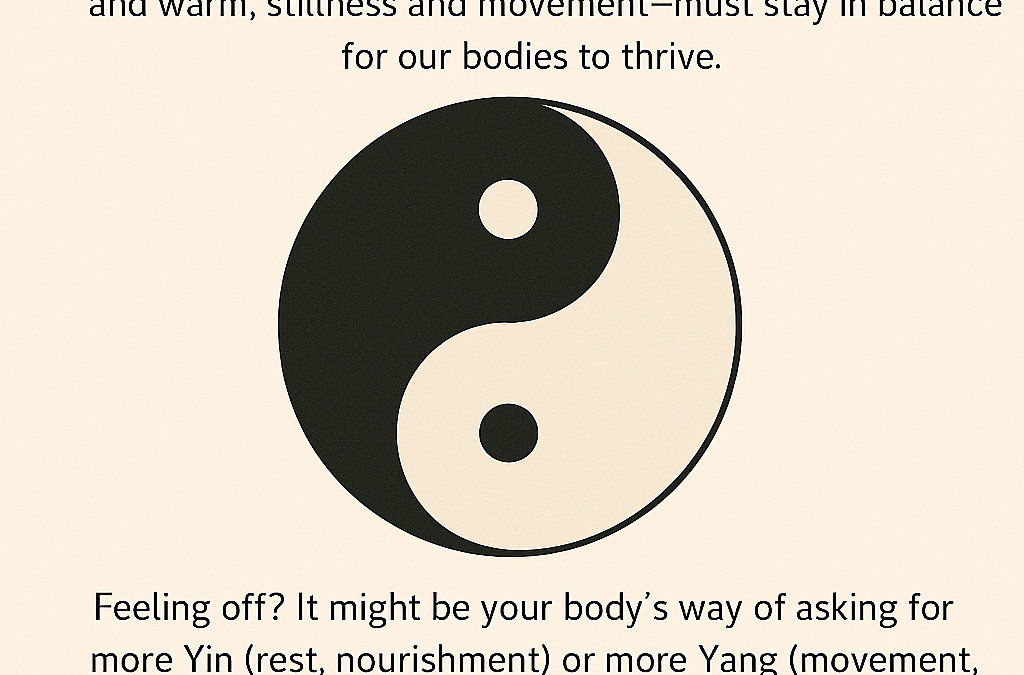

ying yang
Traditional Chinese Medicine (TCM) offers a refreshingly simple yet profound idea: true health comes from harmony. Instead of focusing only on symptoms, TCM looks at the whole landscape of your life—your energy, your habits, your emotions, and even the seasons around you. At the heart of this philosophy lies one timeless principle: balance is everything.
☯️ Yin and Yang: The Dance of Opposites
In TCM, Yin and Yang describe the two complementary forces that shape all aspects of life. They aren’t enemies—they’re partners. Each one supports, tempers, and completes the other.
Yin represents:
- Rest
- Coolness
- Nourishment
- Stillness
- Introspection
Yang represents:
- Activity
- Warmth
- Motivation
- Movement
- Expression
When Yin and Yang flow smoothly and stay in proportion, the body feels grounded, energized, and resilient. When they fall out of sync, we feel it—sometimes subtly, sometimes loudly.
🌱 When You Feel “Off,” Your Body Is Speaking
TCM encourages us to treat discomfort not as an inconvenience but as a message. Feeling sluggish, overwhelmed, irritable, or depleted can be your body’s way of saying something is out of balance.
You may need more Yin if you feel:
- Drained or overstimulated
- Overheated or restless
- Emotionally scattered
- In need of deeper rest or nourishment
Yin replenishes. It cools, soothes, and restores.
You may need more Yang if you feel:
- Cold, heavy, or stagnant
- Unmotivated or stuck
- Low in energy
- Disconnected from movement or warmth
Yang activates. It warms, energizes, and gets things moving again.
These aren’t diagnoses—just gentle ways to tune into your own rhythms and notice what your body might be asking for. For any health concerns, it’s always best to speak with a qualified healthcare professional who can offer personalized guidance.
🍃 Living in Rhythm With Nature
One of the most beautiful aspects of TCM is its reminder that we’re not separate from the natural world—we’re part of it. Just as seasons shift, daylight changes, and tides rise and fall, our bodies move through cycles too.
TCM invites us to:
- Rest more in winter, when nature is quiet
- Lighten up in spring, when growth begins
- Expand in summer, when energy peaks
- Slow down in autumn, when things turn inward
When we align our habits with these natural rhythms, life feels less like a struggle and more like a flow.
🌼 Listening Is the First Step Toward Balance
You don’t need to overhaul your lifestyle to embrace TCM wisdom. It starts with something simple: paying attention.
- Notice your energy throughout the day
- Observe how foods, environments, and emotions affect you
- Honor your need for rest as much as your need for action
- Let your body—not your schedule—set the pace when possible
Balance isn’t a destination; it’s a practice. A gentle, ongoing conversation with yourself.
🌿 A Final Thought
TCM reminds us that wellness isn’t about perfection—it’s about harmony. When we learn to listen to our bodies, respect our limits, and move with the natural rhythms around us, we cultivate a deeper, steadier kind of health.
If you ever want to explore more TCM concepts—like the Five Elements, Qi flow, or seasonal living—I’d love to dive into those with you.
 Small shifts = big healing.